Fed meeting week has arrived, and the timing is useful. The Federal Reserve wraps up its two-day meeting on Wednesday, October 28, mortgage rates are hovering just above 7%, and the latest city-level data shows Silicon Valley no longer moves as one market. Mountain View and Sunnyvale posted year-over-year price gains in September, while Milpitas, Cupertino and San Jose slipped. If you’re buying or selling in the South Bay this fall, the city you’re in matters more than the county headline. Here’s a city-by-city look at where things stand as of October 27, 2026, and what to watch after the Fed speaks.
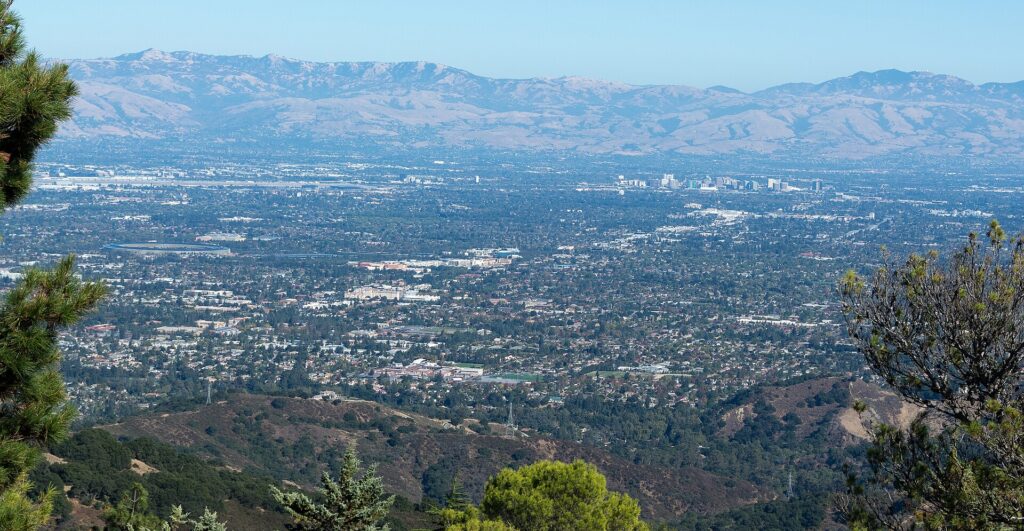
Fed Week: Why October 27–28 Matters for South Bay Buyers
The Fed doesn’t set mortgage rates directly, but its decisions and its tone move the bond market, and mortgage rates follow the bond market. A Reuters poll published October 20 found that nearly all of the economists surveyed expect the Fed to leave rates unchanged at this meeting and then raise them again in December. The decision is due Wednesday afternoon, October 28, at 2:00 p.m. Eastern (11:00 a.m. Pacific).
Here is where borrowing costs stood going into the meeting:
- Freddie Mac (week of October 22): the 30-year fixed averaged 7.32%, down from 7.40% the week before but up from 6.19% a year ago. The 15-year averaged 6.68%. Chief Economist Sam Khater said the dip offered “some relief to prospective homebuyers.”
- Mortgage Bankers Association (week ending October 16): the 30-year conforming rate averaged 7.41%, the jumbo 30-year rate 7.33%, and the 5/1 ARM 6.46%.
- Buyer demand: MBA’s purchase application index fell 7% for the week and was 18% below a year earlier. MBA economist Joel Kan said higher rates are “pricing buyers out of the market.”
- The 10-year Treasury: close to 4.98% on October 23, according to Mortgage News Daily. That’s the benchmark most closely tied to fixed mortgage rates.
Jumbo loans are the norm in much of Silicon Valley, so it’s worth noting that MBA’s jumbo average was slightly below its conforming average last week. A borrower with strong credit and a sizable down payment may get better pricing than the national headlines suggest, so it pays to shop several lenders.
What a Fed “hold, then hike” outlook could mean
If the Fed holds this week and signals a December increase, as most economists expect, the bond market has largely priced that in already, so rates may not move much right away. The bigger risk is a surprise. A more aggressive tone could push the 10-year yield, and mortgage rates, higher. A softer tone could bring a modest dip. Either way, buyers should lock in a rate they can live with instead of trying to time the Fed.
Countywide Context in 60 Seconds
We covered the full county picture in yesterday’s Bay Area housing market update. Here’s the short version:
- Santa Clara County single-family median: $1,880,000 in September, down 4% year over year and up 1.6% from August. Sales rose 3.7% to 726 homes, and average days on market rose to 27 (Santa Clara County Association of REALTORS®, October 14).
- Inventory: Santa Clara was the only Bay Area county where active listings rose from a year ago, up about 21% to 1,224 single-family homes, based on MLSListings data compiled by local agent David Park. Sale prices still averaged about 103% of list.
- Metro trend: Redfin data for the four weeks ending October 11 showed the San Jose metro median sale price down 4.8% year over year, while San Francisco’s was up 18.1%.
The countywide median is falling, but it hides big differences between cities, and that’s where the real opportunities are.
City-by-City Snapshot: September 2026
The figures below come from Redfin’s September 2026 city data. They cover all home types (houses, townhomes and condos), so they won’t match single-family-only reports exactly. Small cities can also swing a lot from one month to the next because they have fewer sales.
Where prices rose
- Mountain View: median sale price $1,836,625, up 9.7% year over year. Homes sold in a median of 12 days at 105.1% of list, and 63.3% sold above asking. Sales fell 12.2%, so buyers competed for fewer homes. Redfin rates it “Very Competitive” (78/100).
- Sunnyvale: median $1,884,103, up 4.1%. Sales rose 4.3% to 233 homes, the median home sold in 16 days, and 62% sold over list. One sign of caution: 20.3% of listings had a price cut, up 2.8 points from last year. Overpriced homes are being corrected quickly.

Roughly flat
- Santa Clara (city): median $1,643,717, down just 0.7%. Sales rose 7.7%, and 59.9% of homes sold above list, up 2.5 points. Days on market rose to 20 from 15, though, so buyers are taking a bit longer to decide.
Where prices slipped
- Campbell: median $1,827,740, down 3.2%. Sales fell 25.9%, and the median home took 31 days to sell, 14 days longer than last year. That’s one of the clearest slowdowns in the county.
- Los Gatos: median $2,438,839, down 3.4%, with sales down 31.6%. Interestingly, the homes that did sell got stronger results: the sale-to-list ratio rose to 102.4%, and 46.9% sold above asking, up 10 points. Buyers are being selective, but they’ll pay for the right home.
- San Jose: median $1,349,357, down 5.0%, on 1,489 sales (about flat). The median home sold in 22 days at 101.1% of list, and 46.4% sold above asking.
- Cupertino: median $2,848,643, down 6.9%, but still the hottest market by speed. The median home sold in just 13 days at 105.4% of list, and Redfin gives Cupertino a Compete Score of 90, its “Most Competitive” rating. Sales rose 8.8%. The lower median likely reflects which homes happened to sell in September more than any real softening in demand.
- Milpitas: median $1,287,887, down 9.4%, the steepest drop in this group. Sale-to-list fell to 100.9%, and Redfin rates Milpitas only “Somewhat Competitive” (46/100). Milpitas has many newer townhomes and condos, so this lines up with the countywide softness in attached homes.

The Pattern Behind the Numbers
Three themes stand out when you put these cities side by side.
1. Proximity to big tech campuses is holding up. Mountain View and Sunnyvale, which sit closest to the largest employers along the 101 and 237 corridors, are the two cities with clear price gains. The broader economy is mixed. Local reporting on WARN filings counted about 22,920 Bay Area workers in layoff notices from January 1 through mid-October, up 13% from last year. Still, buyers with stable tech jobs and stock-based wealth are concentrating their searches near work.
2. Attached homes are the soft spot. Cities with lots of townhomes and condos, like Milpitas and parts of San Jose, are seeing the biggest price declines. That matches the countywide trend: condo prices are down while condo inventory rises.
3. Speed and price are separating. Cupertino and Los Gatos posted lower medians while individual homes still sold quickly or above list. When there are fewer sales, the mix of homes that sell (smaller vs. larger, updated vs. dated) can move the median more than demand does. For both buyers and sellers, recent comparable sales on your own street tell you more than a citywide median.
What This Means for Buyers
- Use the city gap to your advantage. If you’re flexible on location, Milpitas, San Jose and Campbell offer more negotiating room than Mountain View or Sunnyvale. In Campbell, a median of 31 days on market means many sellers are open to conversations about price and credits.
- Price an ARM against the 30-year fixed. MBA data shows the 5/1 ARM about a percentage point below the 30-year fixed. As a rough illustration, on a $1,000,000 loan, principal and interest is about $6,930 a month at 7.41% versus about $6,290 at 6.46%, a difference of roughly $640 a month. ARMs carry reset risk, so talk through the trade-offs with a lender and only take one if you could handle a higher rate later. (Estimate for illustration only; not financial advice.)
- Don’t wait on the Fed. Most economists expect no change this week and a hike in December, so waiting for the Fed is unlikely to bring rate relief soon. Use today’s higher inventory to negotiate, and plan to refinance if rates drop later.
- Bring your strongest offer in the hot cities. In Mountain View, Sunnyvale and Cupertino, homes are still selling 4–5% over list in about two weeks. Our guide on how to make a competitive offer covers pre-approval, contingencies and escalation strategy.
- Look ahead to 2027 ADU rules. Governor Newsom signed AB 956 on September 29, which allows up to two detached ADUs on many single-family lots, according to California YIMBY. If rental income or multigenerational living matters to you, a larger lot could be worth more in 2027 than it is today. Our San Jose ADU guide explains the basics.
What This Means for Sellers
- Price to your city, not the county. A Sunnyvale seller and a Milpitas seller face very different markets. The countywide 4% decline doesn’t apply evenly, so pricing should start with sales from the last 60–90 days in your own neighborhood.
- Watch the first two weeks closely. In Sunnyvale, one in five listings took a price cut in September. If your home isn’t drawing showings and disclosure requests in its first 10–14 days, adjust early. A home that sits gets harder to sell.
- Make financing easier for buyers. With purchase applications down 18% from last year, monthly payments are the main obstacle. Offering a credit toward a rate buydown can bring more buyers to your home than a small price cut.
- Townhome and condo owners need a sharper plan. In softer cities like Milpitas, gather HOA financials, reserve studies and upgrade lists before you list, and expect buyers to compare your home closely with others nearby.
- Late fall can work in your favor. Fewer homes are listed in November and December, and the buyers who are still looking tend to be serious. If your home shows well, you won’t be competing with the spring rush. Our seller services page explains how we plan a launch.
Neighborhood Notes
Within San Jose, detached homes in Willow Glen, Cambrian and Almaden Valley continue to hold value better than condo-heavy areas downtown and in North San Jose. In Sunnyvale and Cupertino, school boundaries still drive the biggest price differences, sometimes block by block. Milpitas buyers comparing newer townhome communities near the transit center should look closely at HOA dues and any Mello-Roos assessments. Browse our Sunnyvale, Milpitas and Cupertino area guides for more on each city.
Frequently Asked Questions
Will the Fed meeting on October 28, 2026 lower mortgage rates?
Probably not right away. Economists polled by Reuters overwhelmingly expect the Fed to hold rates this week and raise them in December. Mortgage rates follow the 10-year Treasury yield, which reacts to the Fed’s tone and to economic data, so rates could move either way after the announcement.
Which Silicon Valley cities had rising home prices in September 2026?
According to Redfin, Mountain View (up 9.7% year over year) and Sunnyvale (up 4.1%) had the clearest gains among the cities we tracked. The City of Santa Clara was roughly flat (down 0.7%).
Where are Silicon Valley home prices falling?
Milpitas had the largest decline in our group (down 9.4%), followed by Cupertino (down 6.9%), San Jose (down 5.0%), Los Gatos (down 3.4%) and Campbell (down 3.2%). Cupertino homes still sold quickly and above list, so that drop likely says more about which homes sold than about weaker demand.
What are jumbo mortgage rates right now?
MBA’s weekly survey put the average 30-year jumbo rate at 7.33% for the week ending October 16, slightly below the 7.41% conforming average. Your rate depends on your credit, down payment and lender.
Is it a buyer’s market in San Jose?
Not quite. San Jose homes still sold at about 101% of list in a median of 22 days in September. It’s a more balanced market than in recent years, with buyers gaining the most leverage on condos, townhomes and homes that have been listed for a few weeks.
Get a City-Specific Plan From Najwa Khoury
Silicon Valley’s housing market now varies from city to city, and even street to street. Whether you’re deciding between Sunnyvale and Milpitas, weighing an ARM against a fixed rate, or figuring out the right list price for your home this winter, Najwa Khoury can put together a free, personalized analysis based on the latest local sales.
Ready to talk? Contact Najwa Khoury today, or sign up for our free Bay Area market report to get updates like this every month.
Sources
- Freddie Mac, “Mortgage Rates Decrease to 7.32%” (October 22, 2026)
- Mortgage News Daily, Daily Newsletter with MBA weekly survey data (October 23, 2026)
- Reuters via U.S. News, “Fed to Skip October but Raise Rates Again in December, Nearly All Economists Say” (October 20, 2026)
- Santa Clara County Association of REALTORS®, Housing Statistics, September 2026
- Redfin housing market data, September 2026: Mountain View, Sunnyvale, Santa Clara, Campbell, Los Gatos, San Jose, Cupertino, Milpitas
- David Park Homes, “Bay Area Housing Market Update: Week of October 23, 2026” (compiling MLSListings, Redfin and WARN data)
- California YIMBY, AB 956: Double Detached ADUs
Last updated: October 27, 2026. Figures reflect the most recent published data at the time of writing. Redfin city medians include all home types and can swing month to month in smaller cities. Payment examples are estimates for illustration only and are not financial advice.