Today is Election Day in California, and for anyone buying or selling a home in San Jose, Santa Clara County, or anywhere in the Bay Area, the ballot is worth a closer look than usual. Several statewide propositions on the November 3, 2026 ballot touch housing directly: a new affordable housing bond, a $25 billion homebuyer loan program, and a measure that would put deadlines on environmental review for housing projects. A regional transit sales tax is also on the ballot in Santa Clara County and its neighbors.
This post is not a voting guide, and I am not telling anyone how to vote. My job is to help you understand how decisions like these could reach your kitchen table, your mortgage, and your neighborhood. Here is a plain-English summary of the housing measures, the latest South Bay numbers, and what it all means for buyers and sellers.
The Bay Area market going into Election Day
Before we get to the ballot, here is where the market stands. These are the latest published monthly figures, which cover September 2026. October numbers will be released over the coming weeks.
- Bay Area median: $1,325,000 for existing single-family homes in September, up 4.2 percent from August and up 1.9 percent from a year earlier, according to the California Association of Realtors (C.A.R.). Regional sales rose 4.9 percent from August but were 3.1 percent lower than September 2025.
- Santa Clara County median: $1,920,000 per C.A.R., up 1.1 percent from August and down 4.0 percent from a year earlier. Sales were up 15.3 percent from August and 1.5 percent year over year.
- Santa Clara County, local MLS view: The Santa Clara County Association of Realtors reported a single-family median of $1,880,000 on 726 sales, down 4 percent year over year and up 1.6 percent from August, with homes spending 27 days on market, compared with 25 days a year earlier.
- Neighboring counties: C.A.R. put San Mateo County at $2,327,500 (up 8.3 percent year over year), San Francisco at $2,054,000 (up 17.4 percent), and Alameda County at $1,265,000 (up 1.2 percent).
- All home types in Santa Clara County: Redfin reported a September median sale price of $1,568,490 across all property types, down 4.7 percent from a year earlier, with 1,045 homes sold, a median of 19 days on market, an average sale-to-list ratio of 102.3 percent, and 52.6 percent of homes selling above list price.
- Mortgage rates: Freddie Mac’s weekly survey put the average 30-year fixed rate at 7.24 percent for the week ending October 29, 2026, down from 7.32 percent the week before. The 15-year fixed averaged 6.60 percent.
- Statewide: The California median was $899,720 in September, up 1.7 percent from a year earlier. Homes statewide sold in a median of 29 days at 98.8 percent of list, and the unsold inventory index held at 3.7 months.
The short version: prices in Santa Clara County are slightly below last year, homes are taking a few more days to sell, and well-priced homes still sell above asking more often than not. San Mateo and San Francisco have been stronger on price. Rates are high but easing. That is the backdrop the election lands on.
The housing measures on today’s California ballot
CalMatters counts 14 statewide propositions on this ballot. Three of them speak most directly to housing. Here is what each one would do, based on nonpartisan reporting and the official descriptions.
Proposition 1: $11.25 billion housing bond
Prop. 1 would authorize $11.25 billion in state general obligation bonds. According to the CalMatters voter guide, $1.25 billion would go to veteran housing, and the rest would fund affordable rental housing, homeownership programs including down payment assistance, farmworker housing, student housing, tribal housing, supportive housing, and preservation of existing affordable homes. The estimate is up to 40,000 multifamily rental units, plus help for another 40,000 households to buy a home. The state would repay an estimated $500 million to $600 million per year for about 25 years.
Supporters include Gov. Gavin Newsom and the California Apartment Association; opponents, including the Mercury News editorial board, question adding state debt without tackling why housing costs so much to build.
Proposition 37: $25 billion homebuyer loan program
This is the measure first-time buyers keep asking me about. As reported by CBS News Bay Area, Prop. 37 would authorize up to $25 billion in bonds to offer fixed-rate loans covering up to 17 percent of the purchase price of a qualifying home. Key details:
- Buyers must put at least 3 percent down.
- Household income must be below 200 percent of the area median income, and buyers must have lived in California for at least a year.
- The home must be new construction or the first sale of a converted nonresidential property. Existing resale homes do not qualify.
- Price caps range from $1 million to $1.5 million depending on the county, adjusted each year.
The California Association of Realtors, State Treasurer Fiona Ma, and several labor groups support it. No opposing argument was filed for the state voter guide, though the League of Women Voters opposes it, arguing it does not require homes to be near jobs, transit, or services. The California Budget & Policy Center has also questioned whether it would make homeownership more affordable.
Proposition 45: deadlines for environmental review
Prop. 45 would change the California Environmental Quality Act (CEQA) for projects it defines as essential, which include housing, along with water, energy, roads, broadband, health facilities, and wildfire projects. According to LAist, environmental review would be capped at about 365 business days, courts would have to rule on lawsuits within 270 days, and courts would be more limited in rejecting a project in its entirety. It needs a simple majority to pass.
Supporters include the California Chamber of Commerce and the California Republican Party. Opponents include the California Democratic Party, the Sierra Club of California, and the California Labor Federation, who say the definition of essential projects is too broad.
The Connect Bay Area regional transit measure
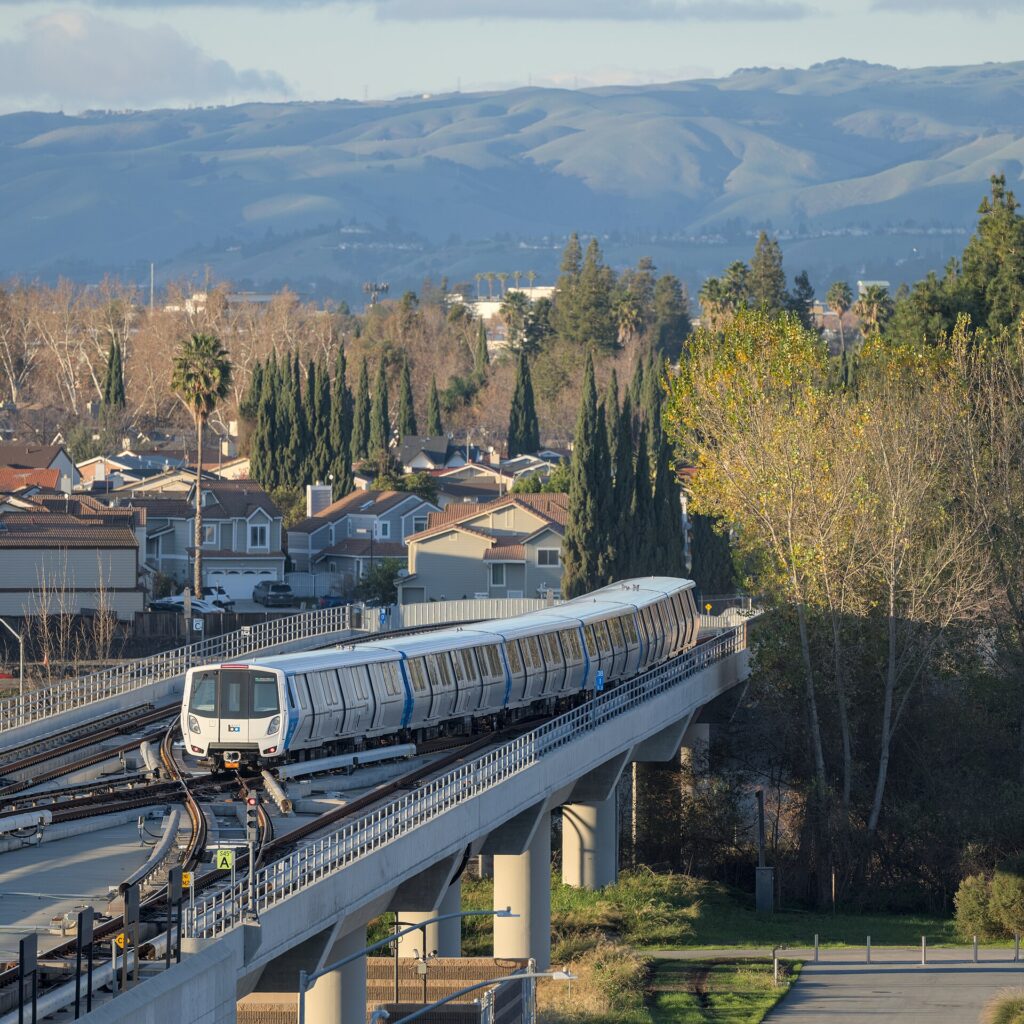
Closer to home, voters in Santa Clara, San Mateo, Alameda, and Contra Costa counties are deciding on a half-cent sales tax for transit, with a one-cent rate in San Francisco, for 14 years. SPUR estimates the Santa Clara County share at more than $300 million a year, with about $264 million going to VTA and the rest to regional programs and Caltrain. It is not a housing measure, but transit access is one of the factors that shapes demand in neighborhoods near BART, Caltrain, and light rail.
Local measures vary by city. According to the SV@Home election hub and United Way Bay Area, in Santa Clara County, Los Altos voters are deciding Measure D, and Mountain View has Measures E and F, which touch housing and planning. San Mateo County’s Redwood City has Measure E on rent stabilization. Check your own sample ballot for what applies to your address.
What it means for buyers
Do not wait on the election to plan. Even if a measure like Prop. 37 passes, a new state loan program takes time to set up, and California counts ballots for days or weeks after Election Day. Today’s rates, today’s prices, and today’s inventory are what you can act on.
Know where Prop. 37 could and could not help in the South Bay. The program is limited to new construction with county price caps between $1 million and $1.5 million, and household incomes under 200 percent of area median income. With the Santa Clara County single-family median at $1.88 million to $1.92 million depending on the source, most detached homes here would sit above those caps. Newer condos and townhomes, including new-build communities in areas like North San Jose and Berryessa, are where a program like this would matter most. If you are a first-time buyer, my first-time homebuyer’s guide to San Jose covers the down payment programs and steps available today.
Use the season. Homes are taking a little longer to sell than a year ago, and late fall usually brings fewer buyers competing. With the 30-year average easing to 7.24 percent, a fully underwritten preapproval and a clear budget put you in a strong spot. For a detailed look at what it takes to qualify here, see our recent post on Santa Clara County housing affordability and the income needed to buy.
What it means for sellers
Elections rarely change local demand overnight. The things that move South Bay prices are jobs, mortgage rates, and the number of homes for sale. None of today’s measures changes those right away, so there is no need to pull a listing or delay a launch because of the election.
Price to the market you have. Santa Clara County prices are about 4 percent below a year ago on both C.A.R. and local MLS data, and days on market are a bit longer. Buyers are comparing more homes, so a price set from recent neighborhood sales still matters more than any headline.
Think about who your buyer might be next year. If you own a newer condo or townhome, or a property in a transit-served area, pay attention to how Prop. 37 and the transit measure turn out. Each could shape the buyer pool over time, though neither would take effect immediately.
Prepare now for the January to spring window. Using November and December to repair, declutter, and plan pricing lets you launch the moment the market wakes up after the holidays.
City and neighborhood notes
San Jose. As the county’s largest and most varied market, San Jose has many of the county’s newer condo and townhome communities, so any program aimed at new construction is likely to be felt here. Neighborhoods like Willow Glen, Almaden Valley, and Cambrian remain mostly resale single-family markets, where today’s measures matter less than rates and inventory.
Berryessa and North San Jose. These areas combine newer housing with BART access, which makes them worth watching after the transit vote. Read more in my Berryessa San Jose neighborhood guide.
Mountain View and Los Altos. Both cities have local measures tied to housing and planning on today’s ballot. If you own or are shopping there, the results could affect how and where new homes get built in the next few years.
San Mateo County and the Peninsula. With a September median of $2,327,500, up 8.3 percent from a year earlier, the Peninsula has been firmer than Santa Clara County this fall. Sales there were down 8.6 percent year over year, so supply is tight. Redwood City voters are also deciding a rent stabilization measure.
Frequently asked questions
Does a midterm election affect Bay Area home prices?
Usually not directly or quickly. Local prices depend mostly on mortgage rates, employment, and supply. Specific measures, like housing bonds or loan programs, can shape the market over months and years, not days.
Can I use Prop. 37 to buy an existing home in San Jose?
As described in news coverage, no. The program would apply only to new construction or the first sale of a converted nonresidential property, with county price caps between $1 million and $1.5 million. It would also need to pass and then be set up before any loans are made.
What is the median home price in Santa Clara County right now?
For September 2026, C.A.R. reported $1,920,000 for existing single-family homes, and the Santa Clara County Association of Realtors reported $1,880,000. Redfin’s all-property-type median was $1,568,490. The numbers differ because each source measures a slightly different set of sales.
What are mortgage rates today?
Freddie Mac’s latest weekly average, for the week ending October 29, 2026, was 7.24 percent for a 30-year fixed and 6.60 percent for a 15-year fixed. The next weekly reading comes out Thursday. Your actual rate depends on your credit, down payment, and loan type, so get a current quote from a lender.
Should I wait until after the election to buy or sell?
For most people, the election is not a reason to wait. Your timing should follow your life plans, your finances, and the local market. If a specific measure could affect you, such as a new-construction purchase under Prop. 37, we can build that into your plan.
Where can I read the official ballot information?
The California Secretary of State publishes the official voter guide at voterguide.sos.ca.gov, and your county sample ballot lists local measures for your address.
Let’s make your plan, whatever the results
Ballot results will take time to settle, but your next move does not have to wait. Whether you are a first-time buyer wondering if a new-construction condo could work for you, or a homeowner deciding whether to list this winter or in spring, I will walk you through the latest local numbers and what they mean for your street. Visit my buyer services page, or call or text me at 408-477-6262 to get started.
Najwa Khoury, Real Brokerage, DRE #02026194
Sources are linked throughout, including C.A.R., SCCAOR, Redfin, Freddie Mac, CalMatters, CBS News Bay Area, LAist and SPUR. This article is for general information only and is not legal, tax, or voting advice.